
As part of the project “Better Cohesion in the Western Balkans through the Development of Energy Communities,” Milieukontakt Albania successfully organized two international study visits that brought together mayors, municipal representatives, and energy experts from across the Western Balkans to exchange knowledge, strengthen regional cooperation, and accelerate the transition toward renewable, community led energy systems.
Supported by the Open Society Foundations – Western Balkans, the study visits took place in Ioannina, Greece (23 April 2026) and Bologna, Italy (24 June 2026), providing participants with insights into successful Renewable Energy Community (REC) models and practical approaches that can be adapted in their own municipalities.
Learning from Greece: Community Energy in Practice
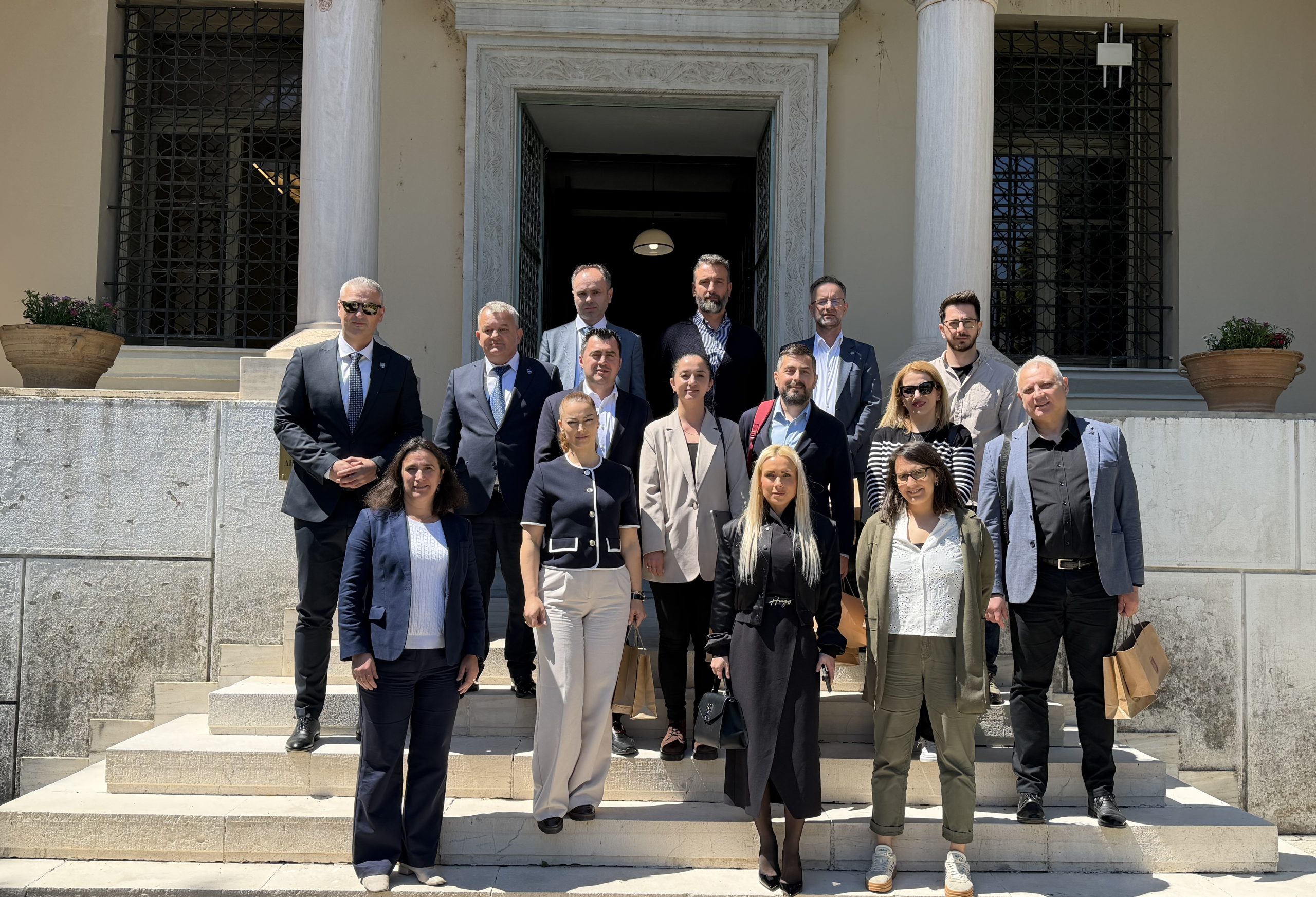
The first study visit was hosted in Ioannina, Greece, by Electra Energy Cooperative, a pioneer in promoting citizen-led energy communities and democratic participation in the energy transition.
The programme focused on strengthening cross-border cooperation between Balkan and Greek municipalities while showcasing practical examples of local energy transition. Participants explored how municipalities can support the creation and development of Renewable Energy Communities, encourage citizen participation, and build local partnerships for sustainable energy projects.
The agenda featured presentations from the Municipality of Ioannina, which shared its vision of becoming one of Europe’s 100 climate-neutral and smart cities by 2030, as well as contributions from the Municipality of North Tzoumerka, which presented its experience in establishing an Energy Community to promote energy autonomy, green development, and social cohesion.
An interactive workshop provided municipalities from the Western Balkans with the opportunity to present their own initiatives, exchange experiences, discuss common challenges, and identify opportunities for future collaboration.
The programme concluded with a study visit to Greece’s first urban community agri-photovoltaic project, allowing participants to observe how renewable energy generation can be successfully integrated with agricultural activities. A cultural visit to the Ali Pasha Museum also offered valuable networking opportunities and strengthened relationships among participants.
The Ioannina visit successfully fostered meaningful dialogue among municipalities, enabling participants to share practical solutions and strengthen cooperation in developing more resilient, community-driven energy systems. It also reinforced the importance of regional collaboration in accelerating climate action and innovation across the Western Balkans.
Discovering Renewable Energy Communities in Emilia-Romagna
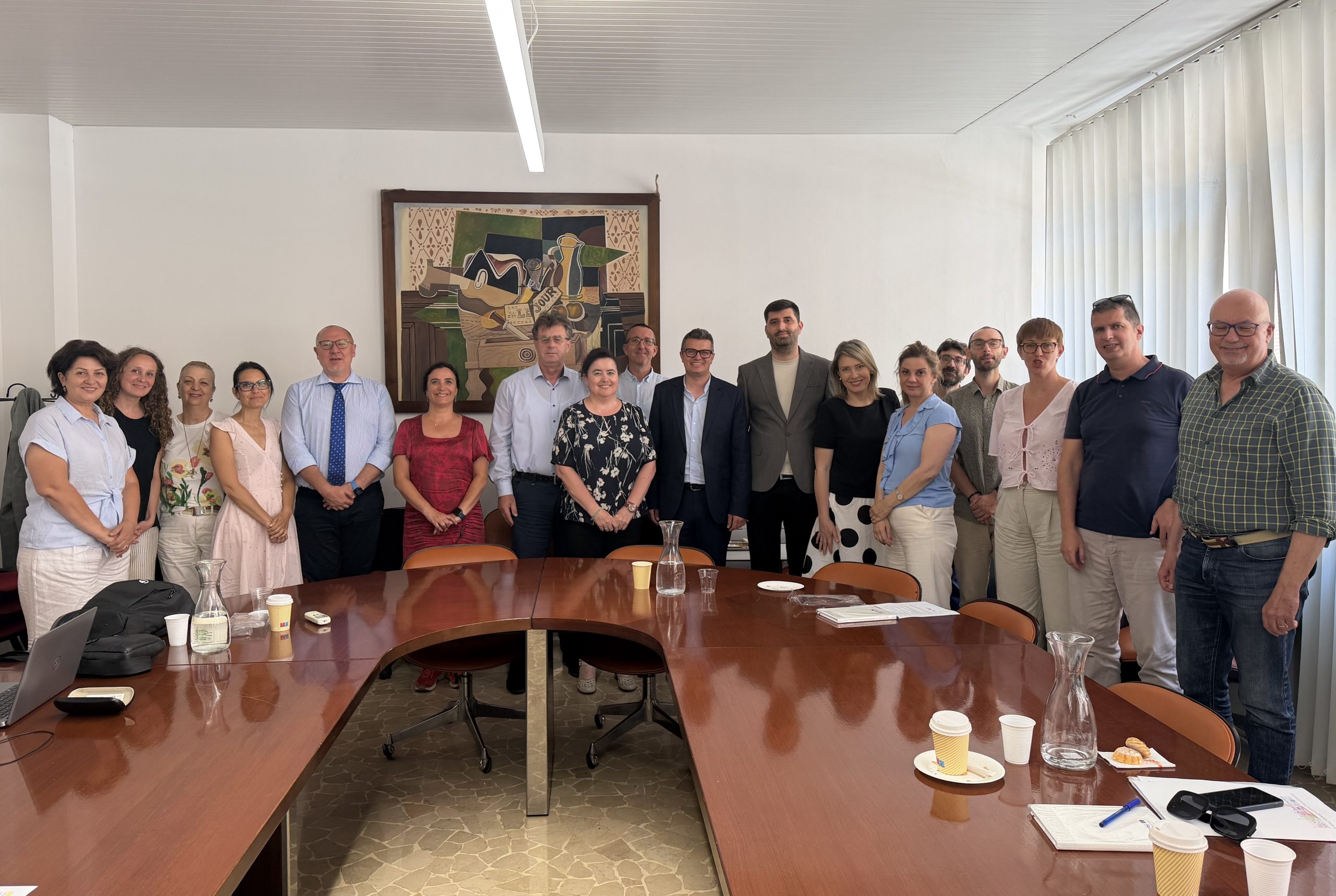
The second study visit took place in Bologna, Italy, hosted by ART-ER and organized by Milieukontakt Albania, with the support of the Open Society Foundations – Western Balkans.
The visit provided an excellent opportunity for municipalities to explore successful Renewable Energy Community models developed in the Emilia-Romagna Region and to better understand the governance, policy, and financial mechanisms that support their implementation.
The programme included presentations on the Open Society Foundations’ Western Balkans Initiative for Renewable Energy Communities, the objectives of the “Better Cohesion in the Western Balkans through the Development of Energy Communities” project, and updates from participating municipalities on renewable energy initiatives currently under development in their respective territories.
Experts from ART-ER and the Emilia-Romagna Region presented the regional enabling framework for Renewable Energy Communities, European cooperation through the LEEWAY and HERCULES-CE projects, and the successful experience of the Fidenza 2030 Renewable Energy Community, demonstrating how local governments can successfully engage citizens and stakeholders in the energy transition.
Participants also visited sustainable energy systems managed by the Emilia-Romagna Region and learned about interventions implemented to improve the energy efficiency of regional public buildings, providing practical examples that can inspire similar initiatives across the Western Balkans.
The Bologna study visit created an excellent platform for exchanging experiences, discussing common challenges, and strengthening cooperation among municipalities working toward greener, more sustainable communities.
Strengthening Regional Cooperation for a Sustainable Future
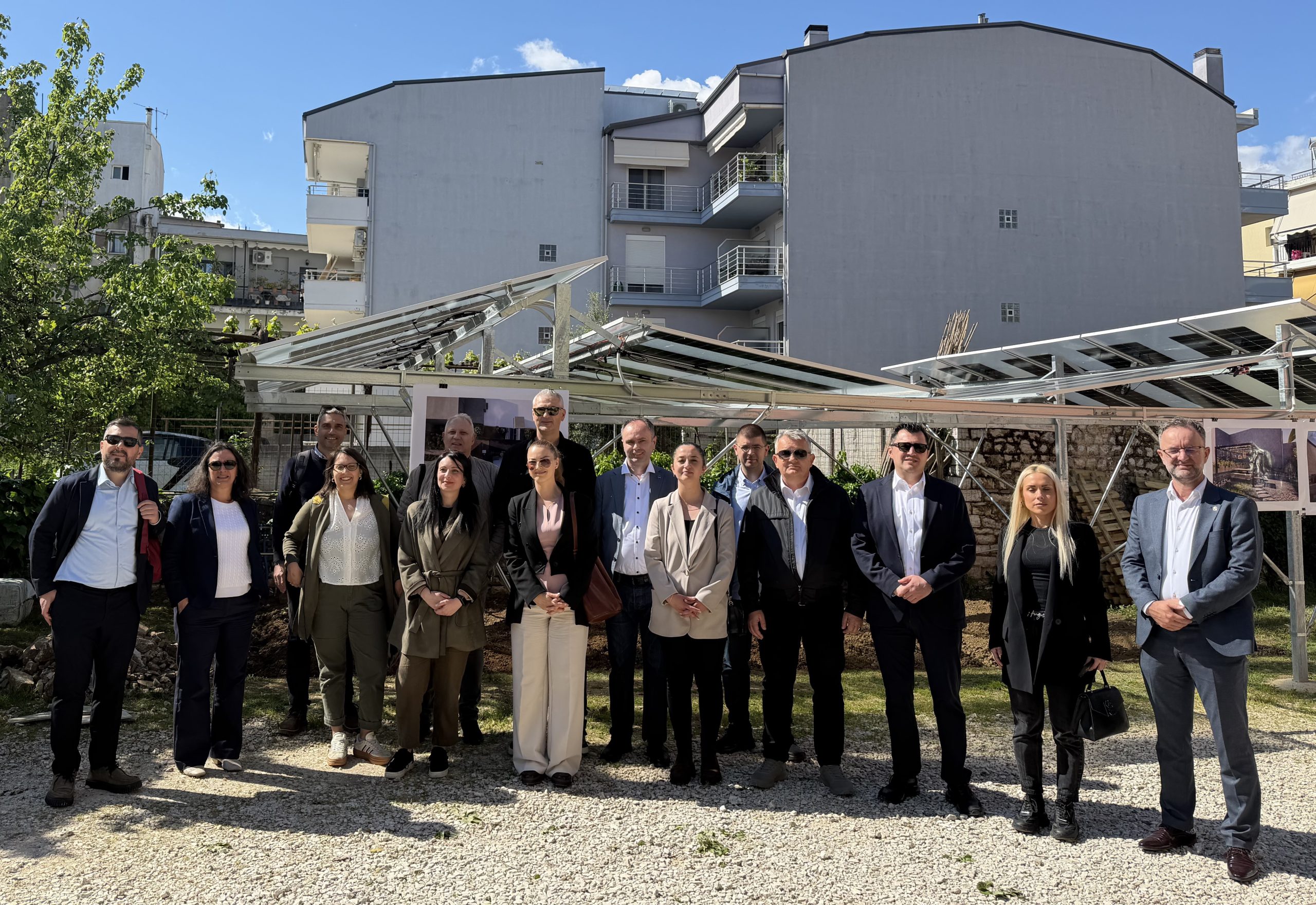
Together, the study visits in Greece and Italy highlighted the importance of peer learning, international cooperation, and knowledge exchange in supporting municipalities as they develop Renewable Energy Communities and advance local energy transitions.
The exchanges enabled participants to gain practical insights, build partnerships, and explore innovative approaches that place citizens at the centre of the energy transition.
Milieukontakt Albania extends its sincere appreciation to all participants, speakers, host organizations, and partners particularly Electra Energy Cooperative, ART-ER, the Emilia-Romagna Region, and the Open Society Foundations – Western Balkans for their valuable engagement and contribution to the success of both study visits.
By working together, municipalities across the Western Balkans are building stronger cooperation, sharing innovative solutions, and creating the foundations for cleaner, more resilient, and community-driven energy systems that will benefit both present and future generations.


