
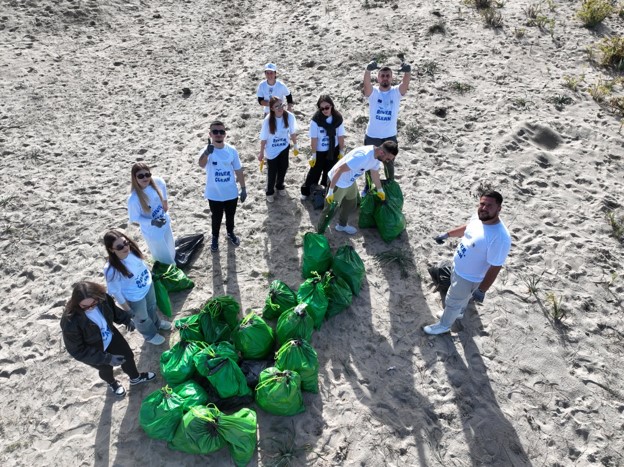
Plastic pollution is becoming one of the biggest environmental problems in Albania. Every year, large amounts of plastic waste end up in rivers and, eventually, in the Adriatic Sea. Plastic bottles, food packaging, shopping bags and other disposable products can remain in nature for hundreds of years, harming wildlife, polluting water and affecting the places where people live, work and spend their holidays. Protecting rivers from plastic pollution is therefore not only an environmental issue but also an important step towards protecting public health, tourism and the country’s natural beauty.
Although plastic represents only about 9% of Albania’s municipal waste, it is one of the most common materials found during clean-up and monitoring activities along rivers and beaches. According to the Albanian Institute of Statistics (INSTAT), around 844,000 tonnes of municipal waste were managed in 2023, but less than one-fifth was recycled. Most waste is still disposed of in landfills, while some is never collected, especially in rural and peri-urban areas. During heavy rain, plastic waste left in open spaces, roadsides or illegal dumping sites is easily washed into streams and rivers before eventually reaching the sea.
The growing tourism sector has also increased the use of disposable plastic products. During the summer season, hotels, restaurants, cafés and beach businesses use large quantities of plastic bottles, cups, food containers and packaging. While tourism brings important economic benefits, it also creates more waste that needs to be properly managed. Without effective collection and recycling systems, much of this waste can end up polluting rivers and coastal areas.
To better understand this problem, the RiverClean Project has been working in the Ishëm and Vjosa River Basins, two of Albania’s most important river systems. The project collects information about the types of litter found on beaches and investigates where this waste comes from. By understanding how plastic moves from towns and villages to rivers and finally to the sea, RiverClean helps identify practical solutions that can reduce pollution at its source.
Monitoring carried out by the project at Cape of Rodon, Hamallaj Beach and coastal areas influenced by the Vjosa River shows a very clear pattern. Most of the litter consists of plastic drink bottles, bottle caps, food wrappers and small pieces of broken plastic. These are everyday items that people use for only a few minutes but that remain in the environment for many years. Their repeated presence during monitoring campaigns shows that plastic pollution is not caused by isolated events but by continuous waste leakage from inland communities.
The two river basins have different characteristics, but they face many of the same challenges. The Ishëm River Basin, which includes the highly populated Tirana and Durrës area, experiences strong pressure from rapid urban growth, high waste generation and infrastructure that has not always kept pace with development. Some settlements still lack adequate waste collection or wastewater systems, making it easier for waste to enter rivers through drainage channels and stormwater networks.
The Vjosa River Basin is different because it includes many rural areas and one of Europe’s last free-flowing rivers. Even so, it also faces problems such as illegal dumping, seasonal tourism and limited waste collection in some communities. Plastic waste discarded near riverbanks or roads can easily be carried downstream during periods of heavy rainfall, eventually reaching the Adriatic coast.
The good news is that many of these problems can be reduced through better implementation of the policies that already exist. Improving waste collection services, especially in peri-urban and rural areas, would prevent large amounts of plastic from entering the environment. Better maintenance of drainage systems and the installation of litter traps in strategic locations would help stop waste before it reaches rivers. Providing more waste bins and recycling facilities at beaches and tourist areas, particularly during the summer months, would also make a significant difference.
Another important step is improving the way packaging waste is managed. Since plastic bottles and caps are among the most common litter items found by RiverClean, introducing a national deposit return system would encourage people to return beverage containers instead of throwing them away. At the same time, strengthening the implementation of Extended Producer Responsibility would require producers and importers to contribute to the collection and recycling of the packaging they place on the market.
However, reducing plastic pollution is not only the responsibility of public institutions. Municipalities, businesses, schools, environmental organisations and local communities all have a role to play. Hotels, restaurants and beach operators can reduce the use of single-use plastics and provide recycling facilities for visitors. Schools and universities can help educate young people about responsible waste management, while community groups can organise clean-up activities and report illegal dumping sites. Even small daily actions, such as using a reusable bottle or disposing of waste correctly, can make an important contribution.
The RiverClean Project shows that good decisions start with good information. By collecting reliable data on plastic pollution, the project helps national and local authorities understand where action is most needed and which measures are producing results. More importantly, it reminds us that cleaner rivers begin far from the coastline. Every piece of plastic that is properly collected, recycled or reused is one less piece of waste that can reach Albania’s rivers and the Adriatic Sea.
Protecting the Ishëm and Vjosa rivers is about much more than keeping beaches clean. It is about protecting nature, supporting tourism, improving the quality of life for local communities and ensuring that future generations can enjoy healthy rivers and a clean coastline. With stronger cooperation, better waste management and greater public awareness, Albania has a real opportunity to significantly reduce plastic pollution and protect some of its most valuable natural resources.
The RIVERCLEAN project is funded by the European Union in Albania and implemented by Milieukontakt Albania in partnership with the Environmental and Territorial Management Institute.


